Oman tilan sadosta notkuvat ruokapöydät, itse tehdyt makkarat ja lammaspaisti, juhlaa varta vasten pantu olut. Himmeästi pimeydessä hehkuvat naurislyhyt ja aavemaiset sarvipäiset hahmot, jotka vaeltavat talosta taloon kerjäten ruokaa ja juomaa. Sauna, jonka hämärissä höyryissä istuvat esivanhemmat kertoen tarinoita aikojen takaa. Talon isäntä ja emäntä kumartumassa pihamaan pyhän puun puoleen, antamassa lahjojaan maan ja puun haltijoille.
Tältä saattoi myös sinun esivanhempiesi kekri eli syksyinen sadonkorjuun juhla näyttää muutama vuosisata sitten. Sadonkorjuun päätösjuhla on ollut yksi vuoden tärkeimmistä ajankohdista ympäri maailmaa. Se on hetki, jolloin elonkorjuu oli saatu päätökseen, tärkeimmät talon työt tehty ja oli aika juhlia ja levätä. Avaan tässä kirjoituksessa sekä meidän kotoperäistä kekriämme sekä muutamia muita sadonkorjuujuhlia, ja lopuksi jaan hieman ideoita miten voit itse valmistella oman sadonkorjuun rituaalisi, vaikka et enää maatalousyhteiskunnassa eläisikään.
Kekri

Suomessa sadonkorjuun juhla tunnetaan nimellä kekri. Sen juuret ovat vuosituhansia vanhassa eurooppalaisessa maatalouskulttuurissa, jossa sadonkorjuun juhla oli maanhaltijoiden ja karjan hedelmällisyyden jumalien kunniaksi järjestetty ilon ja kiitoksen festivaali. Alkujaan kekri ei ollut sidottu tiettyyn ajankohtaan, vaan sitä vietettiin yksilöllisesti maatalon syystöiden valmistumisen mukaan noin syyskuun lopun ja marraskuun alun välillä, erityisesti mikkelinpäivän eli arkkienkeli Mikaelin muistopäivän (29.9.) ja pyhäinpäivän (1.11.) välillä.
Kekri-nimen alkuperä on ollut pitkään epäselvä, mutta nykyisin sen katsotaan olevan myöhäiskantasuomen kieltä vanhempaa perua, koska sillä on vastine saamelaiskielissä, esimerkiksi pohjoissaamen geavri ‘käyrä olento, sompa, päkiä’, eteläsaamen gievrie ‘noitarumpu’. Näiden sanojen juuri on puolestaan esi-indoiranilaisessa kielessä, josta on kehittynyt myös indoiranilaisen kantakielen sana *čakrám ‘pyörä’ ja sanskritin sana cakrám ‘(vaunun) pyörä; auringonkehä; vuoden kierto’. Näin kekri-sanan alkuperäinen merkitys on todennäköisesti sanassa, joka viittaa pyörään, auringonkehään ja vuoden kiertoon. Suomessa ja Karjalassa kekri onkin ollut nimitys vuodenkierron päätösjuhlalle.
Kekri ja sen lukuisat variantit, esimerkiksi keyri ja köyri, ovat merkinneet myös aavetta tai pelottavasti pukeutunutta ihmistä. Mikael Agricolan vuonna 1551 julkaisemassa suomalaisten jumalien luettelossa Kekri mainitaan maan, pellonviljelyksen, karjanhoidon ja hedelmällisyyden jumalana, jonka tehtävänä oli lisätä karjan kasvua eli hedelmällisyyttä: “Käkri se liseis Carjan casvon“. Myöhemmin Kristfrid Gananderin teoksessa Mythologica fennica (1789) selitettiin kekrin tarkoittavan karjaonnen edistäjää ja satovuoden lopettajaisjuhlaa. Sanalla on todennäköisesti siis tarkoitettu sekä karjan hedelmällisyyden jumalaa sekä vuoden vaihdetta.
Kekrin aikaan karja tuotiin laitumilta kylmältä suojaan sisätiloihin tai navettaan. Osa karjasta teurastettiin ruoaksi, ja erityisesti kekrilampaalla oli keskeinen rituaalinen merkitys juhlassa. Juhlassa syötiin runsaasti oman maan ja luonnon antimia: lammaspaistia, makkaroita, juureksia, puuroja, marjoja, sieniä, juustoja, tuoretta leipää ja tietenkin juotiin runsain mitoin erityisesti kekriksi pantua olutta ja viinaa. Tärkeintä nimittäin oli, ettei kukaan jäänyt nälkäiseksi ja että juomaa oli tarpeeksi – muuten uskottiin, että joulusta tulisi niukka: “Jos on viinaton kekri, tulee leivätön joulu”. Ylenpalttisella syömisellä ja juomisella pyrittiin myös takaamaan runsas sato uudelle vuodelle. Myös kaikkia vieraita piti kestitä, muuten saattoi käydä köpelösti.
Ruokaa tarjottiin vieraiden lisäksi myös vainajille ja hengille, joiden uskottiin liikkuvan maailmojen välillä juhlan aikaan. Lokakuun ja marraskuun taitteeseen osui nimittäinen noin kahdentoista päivän mittainen, hyvin maaginen jakso, jota kutsuttiin jakoajaksi. Sen aikana aurinko- ja kuukalenterit tasattiin, ja elettiin ikään kuin kahden vuoden välissä. Jakoaikana monia töitä vältettiin: vain hiljaiset ja siistit askareet sallittiin. Tämä teki ajanjaksosta juhlallisen hengähdyksen arjen raskaiden töiden keskelle. Kekrirauhan julistus ja monet muut kekrin tavat ovat siirtyneet nykyisen joulun tienoille.
Uskottiin, että raja tämän ja tuonpuoleisen maailman välillä oli hauras juuri kekrin aikaan, ja että vainajilla oli silloin lupa vierailla sukulaistensa luona. Esivanhempien uskottiin liikkuvan pelloilla tarkastamassa maitaan ja suojelevan perhettä, jos heidät muistettiin hyvin. Siksi kekriyönä myös sauna pyhitettiin vainajille: elävillä ei ollut asiaa sinne, vaan sauna lämmitettiin hengille, jotka myös syötettiin ja juotettiin hyvin, jotta talon onni säilyisi seuraavanakin satokautena.
Kaikki henget eivät kuitenkaan olleet lempeitä. Kekrin aikaan liikkui myös levottomia vainajia, joita pidettiin loitolla erilaisten tulien ja soihtujen avulla. Nauriista koverrettiin lyhtyjä, joita kutsuttiin kitupiikeiksi, koska lampaantaliin kastettu tikku niiden sisällä paloi varsin kitsaasti. Tästä perinteestä juontaa juurensa myös kynttilöiden vieminen haudoille pyhäinpäivänä, ja naurislyhdyt ovat tietysti sukua Halloweenin kaiverretuille kurpitsalyhdyille.
Talon onnea pyrittiin takaamaan heräämällä kekriaamuna varhain, jopa keskellä yötä. Viimeisenä hereille noussut sai koko vuodeksi liikanimen “köyri”. Uuni sytytettiin niin aikaisin, että sanottiin etteivät “harakatkaan ehtineet nähdä savua”.

Kekri oli myös riehakas juhla. Piiritanssit, laulut ja tarinat kokosivat eri sukupolvet yhteen. Maan hedelmällisyyteen tähtäävä juhla oli myös oivaa kosioaikaa. Nuoret pukeutuivat kekripukeiksi ja kekrittäriksi. Kekripukit pukeutuivat nurinpäin käännettyyn turkkiin, ripustivat kiliseviä kapistuksia ylleen, tekivät sarvet lusikoista tai keritsimistä ja peittivät kasvonsa pelottavalla tuohinaamarilla. Kekrittäret verhoutuivat puolestaan valkoisiin, ja peittivät kasvonsa harsolla tai paperilla. Joskus myös sukupuoliroolit kääntyivät ylösalaisin: miehet pukeutuivat naisten asuihin ja naiset miesten. Kekripukit ja kekrittäret kiersivät talosta taloon ja pyysivät kestitystä, ja yleensä pöydästä löytyi ruokaa tai vähintään ryypyn verran tarjottavaa. Jos mitään ei annettu, saatettiin isäntäväkeä pelotella uunin rikkomisella. Tämäkin tapa on siis sukua Halloweenin karkki vai keppos -kierrokselle.
Kekri ja sitä seurannut jakoaika olivat otollista aikaa tulevaisuuden ennustamiseen. Erityisesti tarkkailtiin säätä ja luonnon merkkejä: jos aurinko paistoi kolmesti pyhäinpäivän ja joulun välillä, oli tulossa hyvä vuosi. Jos lehdet olivat vielä puussa kekrinä, lupasi se takatalvea. Tulevaisuutta katsottiin myös tinasta, jota valettiin ja sen muodoista ennustettiin naimaonnea, rikkauksia tai sairauksia. Tämä kekrin tapa on nyt siirtynyt puolestaan uuden vuoden aattoon.
Kekri oli aikoinaan maaseudun merkittävin juhla. Palvelusväki sai kekrin aikaan vapaaviikon, jolloin nuoret viettivät hauskaa ja etsivät uusia työpaikkoja. Kekrin aika merkitsi vuoden kierron sulkeutumista ja uuden alun valmistelua. Vaikka kristinusko toi mukanaan pyhäinpäivän ja joulun ja tämä vaikutti kekrin juhlintaan, perinteet sulautuivat toisiinsa ilman että vanhat tavat kokonaan katosivat. Amerikkalaisen Halloweenin rantauduttua Suomeen myös kekriperinteet ovat heränneet eloon ja ne nähdään taas tärkeänä osana suomalaista kansanperinnettä ja syksyn sadonkorjuun juhlaa, jossa yhdistyvät kauniilla ja hauskalla tavalla luonnon kunnioitus, esivanhempien muistaminen, yhteisöllisyys ja esihistorialliset sadonkorjuun rituaalit.
Samhain
Amerikkalainen Halloween linee meille kaikille tutuin kaikista maailman sadonkorjuun juhlista. Sen juuret on kuitenkin ikiaikaisessa kelttiläisessä samhain-juhlassa, joka on perinteisesti ajoittunut lokakuun 31. päivän iltaan ja marraskuun 1. päivän alkuun. Se on yksi neljästä suurimmasta kelttiläisestä vuodenkierron juhlahetkestä, joista muut ovat Imbolc, Bealtaine ja Lughnasa. Samhainin tavat muistuttavat monella tapaa suomalaista kekriä.
Uskotaan, että samhainin aikaan raja tämän maailman ja tuonpuoleisen välillä on ohentunut, jolloin vainajien henget saattavat palata vierailemaan jälkeläistensä luona. Heille saatetaan kattaa oma paikkansa myös illallisella.
Samhainin aikana on sytytetty erityisiä kokkoja, joiden uskotaan puhdistavan, suojelevan ja symboloivan siirtymää vanhasta uuteen. Kokkoon saatettiin heittää myös uhrieläinten luita, ja siitä juontuukin englanninkielen kokon nimitys, bonfire. Ihmiset pukeutuvat naamioihin tai asuihin harhauttaakseen mahdollisia pahansuopia henkiä. Myös Halloweenin pelottavat naamiaisasut ovat saaneet alkunsa juurikin tästä perinteestä.

Halloween
Amerikkalaistunut Halloween on nykyään kansainvälinen juhlapäivä, jota vietetään 31. lokakuuta ja se tunnetaan erityisesti naamiaisista, karkki- ja kepposkierroksista (trick or treat) ja kurpitsalyhdyistä. Halloween-nimi tulee englannin ilmauksesta All Hallow’s Eve, joka tarkoittaa kaikkien pyhimysten aattoa, eli päivää ennen pyhäinpäivää. Keskiajalla kristillinen kirkko muokkasi kelttien muinaista Samhain-juhlaa ja liitti sen tähän aikaan. Meille suomessakin pyhäinpäivänä (aiemmalta nimeltään pyhäinmiestenpäivä) tunnettu kaikkien pyhimysten päivä, eli All Saints’ Day, on kristillinen pyhimysten ja marttyyrien muistopäivä 1. marraskuuta. Seuraavana päivänä eli 2.11. katolisissa maissa vietetään kaikkien sielujen päivää (All Souls’ Day), joka on omistettu kaikkien uskollisten edesmenneiden muistamiselle ja rukouksille, erityisesti niille, jotka ovat vielä kiirastulessa.
Näin Halloween on siis pyhäinpäivän aattoilta, kun taas All Saints’ Day ja All Souls’ Day ovat kristillisiä juhlapyhiä, joilla on hieman eri tarkoitus ja merkitys. Suomessa pyhäinpäivä on liikkuva juhlapäivä joka sijoittuu lauantaille, joka osuu lokakuun 31. ja marraskuun 6. välille, eikä varsinaista erillistä Kaikkien sielujen päivää (All Souls’ Day) ole.

Amerikkaan Halloween siirtyi 1800-luvulla irlantilaisten maahanmuuttajien mukana. Juhla kehittyi siellä nuorille ja lapsille suunnatuksi tapahtumaksi, ja karkkien kerääminen ja naamiaiset kasvattavat suosiotaan myös muualla maailmassa. Halloweenin “karkki vai kepponen” -perinne juontaa juurensa kelttiläiseen ja irlantilaiseen tapaan, jossa lapset ja nuoret kulkivat aattoiltana talosta taloon pyytämässä herkkuja. Jos herkkua ei annettu, tehtiin kepponen. Myöhemmin perinne sulautui kristilliseen kaikkien sielujen päivään, jolloin köyhät kulkivat talosta taloon rukoilemassa vainajien puolesta ja saivat vastineeksi sielunkakkuja, eli leivonnaisia tai leipää. 1900-luvulla traditio kehittyi nykyiseen “trick or treat” -muotoon.
Nykyään Halloweenia kritisoidaan sen kaupallisuudesta ja muovikrääsän kuluttamiseen keskittyvästä kulttuuristaan, mutta monet perinteet – kuten vainajien muistaminen – ovat edelleen osa juhlaa monissa perheissä.
Día del Muertos

Meksikon marraskuuhun kuuluu puolestaan värikäs kuolleiden päivä, Día del Muertos. Kuolleiden päivää vietetään 1.–2. marraskuuta, ja sen juuret ulottuvat syvälle esihispaanisiin kuoleman kunnioittamisen rituaaleihin, joihin katolinen pyhäinpäivä ja vainajien päivä ovat sulautuneet. Alunperin meksikon alkuperäiskansan asteekkien sadonkorjuujuhlaa vietettiin elokuussa, mutta kuolleiden päivä siirrettiin marraskuulle pyhäinpäivän yhteyteen katolisen kirkon vaikutuksesta.
Monilla paikkakunnilla juhla alkaa jo 31. lokakuuta, jolloin angelitos, eli edesmenneet lapset, toivotetaan tervetulleiksi vierailemaan kotonaan samettikukista muodostettujen polkujen avulla, joiden voimakkaan tuoksun uskotaan johdattavan heidät kotiinsa.
Koteihin rakennettavat ofrenda-alttarit ovat juhlan sydän. Ne täyttyvät samettikukista, valokuvista, kynttilöistä ja papel picado -silkkipaperikoristeista sekä vainajien lempiruoista ja juomista. Juhlapöydistä löytyy calaveras-sokeripääkalloja ja pehmeää pan de muerto -leipää. Illan hämärtyessä ihmiset kokoontuvat hautausmaille. Siellä musiikki ja nauru sekoittuvat kynttilöiden valoon, ja menehtyneitä rakkaita muistellaan tarinoin ja lauluin.

Kuoleman “eleganttina” symbolina toimii tyylitelty La Catrina -luurankohahmo. Hahmon juuret ovat José Guadalupe Posadan 1900-luvun alun satiirisessa piirroksessa La Calavera Garbancera, joka pilkkasi eurooppalaisuutta ihannoivaa alkuperäiskansojen eliittiä, joka halusi pukeutua kuin eurooppalaiset hienoihin hattuihin ja vaalentaa jopa ihoansa. Hahmon tarkoituksena oli osoittaa, että ulkokuoresta riippumatta jokainen meistä on samanarvoinen kasa luita kuoltuamme. Taiteilija Diego Rivera, joka tunnetaan myös Frida Kahlon aviomiehenä, teki hahmosta kansallisen symbolin ja antoi sille nimen La Catrina kuuluisassa seinämaalauksessaan “Dream of a Sunday Afternoon at Alameda Central Park “. Nykyisin hahmo symboloi paitsi kuoleman hyväksymistä myös meksikolaista identiteettiä; siihen liitetään myös muinaiset kerrostumat, kuten yhteys asteekkien kuoleman jumalattareen.
Día del Muertos on tunnustettu UNESCOn aineettoman kulttuuriperinnön listalle. Juhlassa yhdistyvät kauniilla tavalla iloinen elämän juhlistaminen ja rakkaiden muistaminen, kuoleman ja elämän kiertokulun hyväksyminen.
Rakenna oma sadonkorjuujuhlasi
Kaikkia aiemmin mainittuja sadonkorjuunjuhlia yhdistää siis muun muassa kiitollisuus, vainajien muistaminen, pukeutuminen ja juhliminen, hyvä ruoka, juoma ja hauskanpito. Miltä näyttäisi sinun sadonkorjuujuhlasi? Voit suunnitella omanlaisesi sadonkorjuunjuhlan syksyn pimeneviä iltoja piristämään. Mieti, mitä kaikkea olet itse saavuttanut ja mitä olet saanut – muilta ihmisiltä, luonnolta, esivanhemmiltasi, elämältä yleensä, ja järjestä juhlat kaiken tämän kunniaksi. Muistelkaa edesmenneitä ystäviä ja sukulaisia ilolla ja kertokaa heistä tarinoita. Ehkäpä lämmitätte saunankin tai katatte pöytään yhden ylimääräisen paikan vainajille. Kekrijuhlapöytään on ihana kerätä nyyttärityyliin omissa puutarhoissa tai lähiviljelijöiden pelloilla kasvaneita satokausiherkkuja. Itse pantua tai lähipanimon olutta ei toki pidä unohtaa, se kuuluu ehdottomasti kekripöytään. Ja muista, että pääasia on että ruokaa ja juomaa on tarpeeksi, koska kekrinä pitää syödä yltäkylläisesti. Älä unohda myöskään lepoa ja taikoja – jakoaikana ei saisi ahkeroida, vaan keskittyä lepoon ja juhlaan sekä taikojen tekoon!
Omassa suomalais-amerikkalaisessa perheessämme yhdistämme iloisesti kaikki sadonkorjuun perinteet. Koristelemme pihan kaiverretuilla kurpitsalyhdyillä, syömme runsaan sadonkorjuuaterian ja saunomme ystävien kanssa. Sytytämme pihamme alttarille kynttilän vainajille ja nostamme kotialttarille kuvia jo tuonilmaisiin siirtyneistä rakkaistamme ja koristelemme sen sadonkorjuun herkuilla. Pukeudumme pelottaviin asuihin ja vaellamme ympäri kylää hämärässä muiden kyläläisten kanssa karkki vai kepponen -kierroksella ja järjestämme monenlaista ohjelmaa kummitustaloista oraakkelikorttien luentaan ja kurpitsankaivertamiseen. Vuosi vuodelta perinne tuntuu kehittyvän ja Fiskarsista onkin kasvamassa pikkuhiljaa kotimaamme virallinen Halloween-pääkaupunki.
Jos muuten kiinnostuit orakkeelikorteista, voit tilata meidän suositut Nordic Forest Rituals -oraakkelikortit saunaanimals.com-kaupastamme (huom. kortteihin on julkaistu myös suomenkielinen eKirja!) ja niiden syntytarinan voit myös lukea täältä. Rakastan itse käyttää oraakkelikortteja omien tulevaisuudensuunnitelmien vahvistamiseen tai päätöksen teon intuitiivisena tukena, vaikka en tulevaisuutta suoraan niiden avulla ennustaisikaan. Kekriin ja jakoajan maagisiin tunnelmiin ne sopivat kuitenkin erinomaisesti!
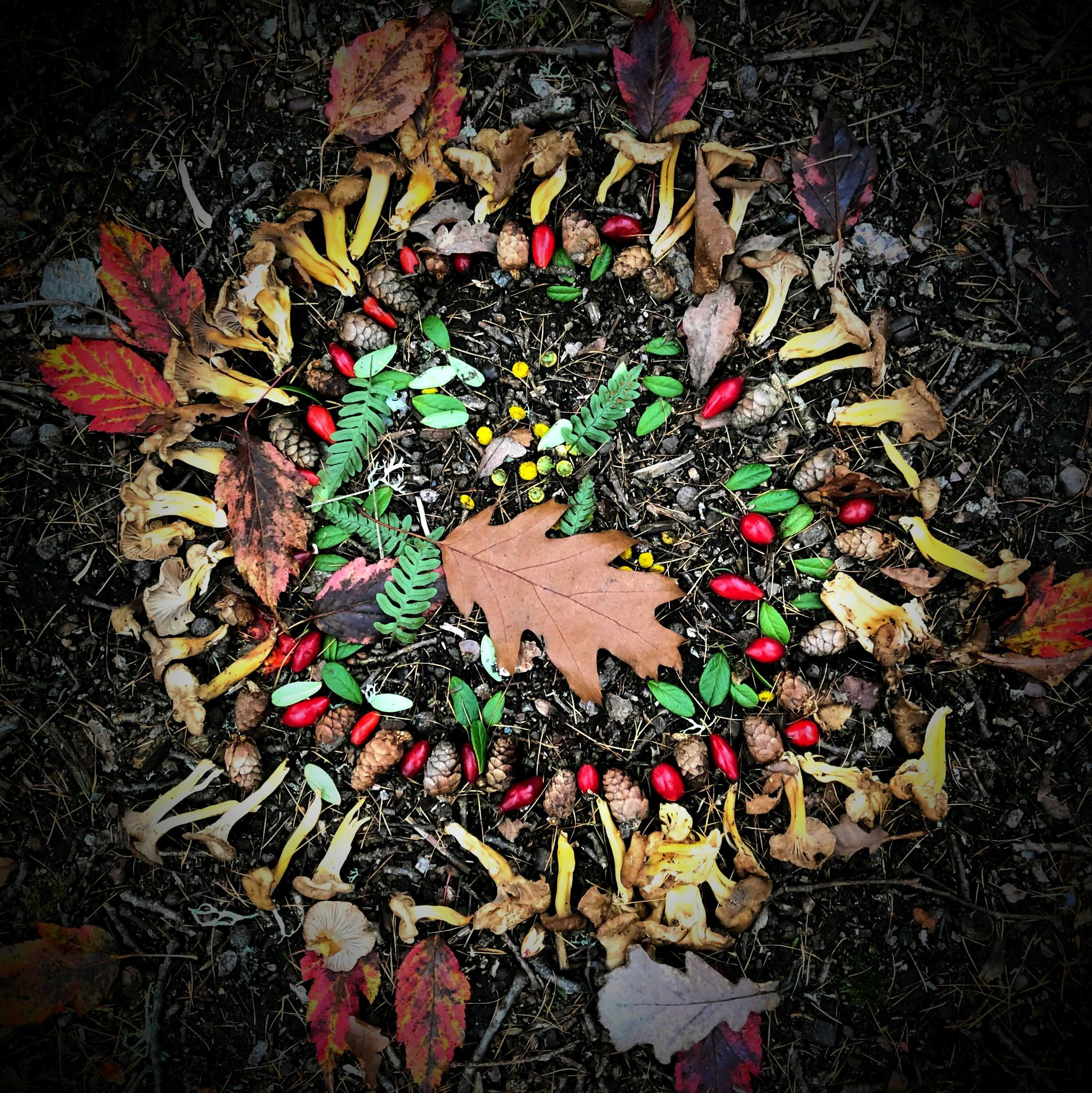
Ehdotuksia sadonkorjuun juhlan alttarille
ELEMENTTI: maa
VÄRIT: oranssi, keltainen, ruskea, punainen, sammalenvihreä ja kulta
TUOKSUT: omena, kaneli, pudonneet lehdet
KUKAT JA PUUT: värikkäät lehdet, pihlajanoksat punaisine marjoineen, mustikan- ja puolukanvarvut, kanervat, syyshortensiat, muratti ja koristekaalit
KIVET: Spektroliitti sopii erinomaisesti syksyn alttarille. Se tunnetaan myös labradoriittina, ja muuten harmaa kivi heijastaa kauniisti sateenkaaren värejä valoon osuessaan. Spektroliitin uskotaan lisäävän luovuutta ja herättävän kauneuden kaipuun.
MUUT ELEMENTIT:
Koska syksyllä muistelemme esivanhempia ja luonnon kiertokulkua, voit asetella alttarillesi rakkaiden vainajien valokivia, metsästä löytyneitä luita, hampaita ja sarvia. Syksyiselle alttarille sopivat tietysti myös kaikenlaiset satokauden hedelmät, kuten omenat, kurpitsat, pihlajanmarjat ja tietenkin nauris- tai kurpitsalyhdyt.
Harvest Rituals: Kekri, Samhain, Halloween and Día de los Muertos
Tables laden with the bounty of the land, homemade sausages and roast lamb, and beer brewed especially for the festivities. Turnip lanterns glowing faintly in the darkness, and eerie, horned figures wandering from house to house, begging for food and drink. The sauna, where ancestors sit amid the dim, rising steam, sharing stories from long ago. The master and mistress of the house bowing before the sacred tree in their yard, offering gifts to the spirits of the land and the tree.
This is what your own ancestors’ Kekri, the autumn harvest festival, might have looked like a few centuries ago. Around the world, the celebration marking the end of the harvest has been one of the most important moments of the year. It was a time when the harvest had been gathered, the most pressing farmwork completed, and it was finally time to celebrate and rest.
In this article, I explore our native Finnish Kekri tradition alongside several other harvest festivals from around the world. At the end, I share some ideas to help you create your own harvest ritual, even if you no longer live in an agricultural society.
Kekri
In Finland, the harvest festival is known as Kekri. Its roots reach back thousands of years into ancient European agricultural culture, when harvest celebrations were joyful festivals of gratitude and offerings in honor of the spirits of the land and the deities associated with livestock fertility. Originally, Kekri was not tied to a specific date. Each farm celebrated according to when its autumn work was completed, usually sometime between late September and early November, particularly between Michaelmas, the feast day of the Archangel Michael on September 29, and All Saints’ Day on November 1.
The origin of the name Kekri remained unclear for a long time. Today, it is thought to predate the Late Proto-Finnic language, as related words are found in Sámi languages. Examples include Northern Sámi geavri, meaning a curved object, a knob, or a rounded extremity, and Southern Sámi gievrie, meaning a shamanic drum. The roots of these words, in turn, reach back to a pre-Indo-Iranian language, from which the Proto-Indo-Iranian word čakrám, meaning “wheel,” and the Sanskrit word cakrám, meaning “wheel of a chariot,” “solar disk,” or “cycle of the year,” also developed. The original meaning of Kekri may therefore have been connected to the wheel, the sun’s circle, and the turning of the year. In Finland and Karelia, Kekri came to signify the festival marking the end of the annual cycle.
Kekri, along with its many regional variants, such as Keyri and Köyri, has also referred to a ghost or a frighteningly disguised person. In his list of Finnish deities published in 1551, Mikael Agricola described Kekri as a god associated with the earth, agriculture, livestock, and fertility, whose role was to increase the fertility of farm animals. He wrote: “Käkri se liseis Carjan casvon” — “Kekri increases the growth of livestock.” Later, in his work Mythologia Fennica (1789), Kristfrid Ganander explained Kekri as a figure who promoted good fortune in livestock breeding and as the festival marking the end of the harvest year. The word thus likely referred both to a deity of livestock fertility and to the turning point between years.
At Kekri, livestock were brought in from the pastures and sheltered from the cold, either indoors or in the barn. Some animals were slaughtered for food, and the Kekri lamb held particular ritual significance. The feast featured generous helpings of everything the land and nature had provided: roast lamb, sausages, root vegetables, porridge, berries, mushrooms, cheese, freshly baked bread, and, of course, plenty of beer and spirits brewed especially for the occasion.
The most important thing was that nobody went hungry and that there was enough to drink. Otherwise, people believed Christmas would be a meager affair. An old saying warned: “If Kekri passes without spirits, Christmas will be without bread.” Abundant eating and drinking were also intended to ensure a plentiful harvest in the coming year. Every visitor had to be offered hospitality, too, or misfortune might follow.
Food was offered not only to guests but also to the deceased and to spirits believed to move between worlds during the festival. Around the turn of October and November came a roughly twelve-day period of great magical significance known as jakoaika, or the division time. During this interval, the solar and lunar calendars were brought into alignment, and people were thought to be living, in a sense, between two years.
Many kinds of work were avoided during this period; only quiet, orderly tasks were permitted. This made it a sacred pause amid the heavy labor of everyday life. The proclamation of Kekri peace, along with many other Kekri customs, eventually migrated to the Christmas season as we know it today.
People believed that the boundary between this world and the next grew fragile around Kekri, allowing the spirits of the dead to visit their relatives. Ancestors were thought to roam the fields, inspecting their lands and protecting their families, provided they were properly remembered. For this reason, the sauna was also consecrated to the dead on Kekri night. The living were not supposed to enter it. Instead, the sauna was heated for the spirits, who were offered plenty of food and drink to ensure the household’s good fortune in the next growing season.
Not all spirits were benevolent, however. Restless souls were also believed to roam during Kekri, and people kept them at bay with fires and torches. Turnips were hollowed out to make lanterns called kitupiikit. Inside each lantern, a small stick dipped in sheep’s tallow burned with a feeble, miserly flame. This tradition is also connected to the custom of placing candles on graves on All Saints’ Day. And, of course, turnip lanterns are close relatives of the carved pumpkin lanterns of Halloween.
People sought to secure good fortune for their households by rising early on Kekri morning, sometimes even in the middle of the night. The last person to get up earned the nickname Köyri for the entire year. The oven was lit so early that people said even “the magpies had not yet seen the smoke.”
Kekri was also a lively, exuberant celebration. Circle dances, songs, and storytelling brought generations together. Since the festival was intended to promote the fertility of the land, it was also an excellent time for courtship.
Young people dressed up as Kekri goats and Kekri maidens. The Kekri goats wore their fur coats inside out, hung rattling objects from their clothes, fashioned horns from spoons or shears, and concealed their faces behind frightening masks made of birch bark. The Kekri maidens, meanwhile, dressed in white and covered their faces with veils or paper. Sometimes gender roles were turned upside down, with men dressing as women and women as men.
The masked figures went from house to house asking for food and drink. Usually, the table offered something to eat or at least a small drink. If the household gave them nothing, the visitors might threaten to break the oven. This custom, too, has much in common with Halloween’s trick-or-treat tradition.
Kekri and the division time that followed were considered especially auspicious for divination. People paid particular attention to the weather and signs in nature. If the sun shone three times between All Saints’ Day and Christmas, the coming year would be a good one. If the trees still had their leaves at Kekri, it foretold a return of winter weather.
People also practiced divination by melting tin and interpreting the shapes it formed to predict marriage prospects, wealth, or illness. This Kekri custom has since migrated to New Year’s Eve.
In the past, Kekri was the most important festival of the Finnish countryside. Farmhands and servants were given a week off, during which young people enjoyed themselves and looked for new employment.
Kekri marked the closing of the annual cycle and the preparation for a new beginning. Christianity introduced All Saints’ Day and Christmas, influencing how Kekri was celebrated, but the traditions gradually blended rather than disappearing altogether. Since American Halloween arrived in Finland, Kekri customs have also experienced a revival. Today, they are once again recognized as an important part of Finnish folk heritage and the autumn harvest season, bringing together respect for nature, remembrance of ancestors, community, and prehistoric harvest rituals in a beautiful and joyful way.
Samhain
American Halloween is probably the best-known harvest-season celebration around the world. Yet its roots lie in the ancient Celtic festival of Samhain, traditionally observed on the evening of October 31 and the beginning of November 1. Samhain is one of the four great seasonal festivals of the Celtic year. The other three are Imbolc, Bealtaine, and Lughnasa. In many ways, Samhain customs resemble those of Finnish Kekri.
According to tradition, the boundary between this world and the next grows thinner around Samhain, allowing the spirits of the dead to return and visit their descendants. A place may even be set for them at the dinner table.
Special bonfires were lit during Samhain. These fires were believed to purify and protect, while symbolizing the transition from the old year to the new. The bones of sacrificial animals might also be thrown onto the fire, which is thought to be the origin of the English word bonfire. People wore masks or disguises to confuse and ward off potentially malevolent spirits. The frightening costumes associated with Halloween also trace their roots to this tradition.
Halloween
Halloween, in its Americanized form, has become an international celebration held on October 31. It is especially known for fancy dress, trick-or-treating, and carved pumpkin lanterns.
The name Halloween comes from the English expression All Hallows’ Eve, meaning the eve of All Saints’ Day. During the Middle Ages, the Christian Church adapted the ancient Celtic Samhain festival and connected it with this time of year.
All Saints’ Day, known in Finland as pyhäinpäivä and formerly as pyhäinmiestenpäivä, is a Christian feast day commemorating saints and martyrs. It falls on November 1. The following day, November 2, is All Souls’ Day in Catholic countries. This day is dedicated to remembering and praying for all the faithful departed, particularly those believed to remain in purgatory.
Halloween is therefore the eve of All Saints’ Day, while All Saints’ Day and All Souls’ Day are Christian observances with somewhat different purposes and meanings. In Finland, All Saints’ Day is a movable feast celebrated on a Saturday between October 31 and November 6. There is no separate national observance of All Souls’ Day.
Halloween traveled to America with Irish immigrants in the nineteenth century. There, it developed into a celebration particularly popular with children and young people. Trick-or-treating and costume parties have since grown increasingly popular in other parts of the world, too.
The Halloween tradition of “trick or treat” has roots in Celtic and Irish customs in which children and young people went from house to house on the eve of the festival asking for treats. If none were given, a prank might follow.
Later, this tradition blended with Christian All Souls’ Day customs, when poor people went from house to house offering prayers for the dead in exchange for soul cakes, small baked goods or pieces of bread. During the twentieth century, the tradition evolved into the familiar modern form of trick-or-treating.
Today, Halloween is often criticized for its commercialization and its culture of disposable plastic decorations and consumerism. Yet many of its older traditions, including remembering the dead, continue to be part of the celebration in families around the world.
Día de los Muertos
In Mexico, November brings the colorful celebration of the Day of the Dead, Día de los Muertos. Celebrated on November 1 and 2, it has deep roots in pre-Hispanic rituals honoring the dead, which later blended with Catholic All Saints’ Day and All Souls’ Day traditions.
Originally, the Aztecs, one of Mexico’s Indigenous peoples, held a harvest festival connected with the dead in August. Under the influence of the Catholic Church, the celebration was moved to November to coincide with the Christian observances honoring the departed.
In many communities, the festivities begin as early as October 31, when angelitos, or the spirits of deceased children, are welcomed home. Paths made of marigolds guide them toward their families, as the flowers’ powerful fragrance is believed to lead the spirits home.
Altars known as ofrendas, built in people’s homes, are at the heart of the celebration. They are adorned with marigolds, photographs, candles, delicate papel picado decorations cut from tissue paper, and the favorite foods and drinks of the deceased. Festive tables feature calaveras, or sugar skulls, and soft, sweet pan de muerto, the traditional bread of the dead.
As evening falls, people gather in cemeteries. Music and laughter mingle with the glow of candlelight as families remember their departed loved ones through stories and songs.
An elegant symbol of death is the stylized skeleton figure known as La Catrina. Her origins lie in an early twentieth-century satirical illustration by José Guadalupe Posada, titled La Calavera Garbancera. The illustration mocked members of the Indigenous elite who aspired to European ideals, wearing fashionable European hats and even attempting to lighten their skin.
The image conveyed a powerful message: beneath our outward appearances, we are all equal in death, reduced to the same collection of bones.
The artist Diego Rivera, also known as the husband of Frida Kahlo, transformed the figure into a national symbol and gave her the name La Catrina in his famous mural Dream of a Sunday Afternoon in Alameda Central Park. Today, La Catrina symbolizes not only the acceptance of death but also Mexican identity. The figure is also associated with older cultural layers, including connections drawn to the Aztec goddess of death.
Día de los Muertos has been recognized by UNESCO as part of the Intangible Cultural Heritage of Humanity. The celebration beautifully brings together the joyful celebration of life, the remembrance of loved ones, and an acceptance of the cycles of life and death.
Create Your Own Harvest Celebration!
The harvest festivals described above share many elements: gratitude, remembrance of the dead, dressing up, celebration, good food and drink, and having fun.
What would your own harvest celebration look like?
You can create a festival of your own to brighten the darkening autumn evenings. Reflect on everything you have accomplished and everything you have received — from other people, from nature, from your ancestors, and from life itself — and gather to celebrate it all.
Remember departed friends and relatives with joy, and share stories about them. Perhaps you could heat the sauna or set an extra place at the table for the dead.
A wonderful way to prepare a Kekri feast is to invite everyone to bring seasonal delicacies grown in their own gardens or by nearby farmers. Homebrewed beer or something from a local brewery should certainly not be forgotten; it belongs at the Kekri table. And remember, the most important thing is to have plenty of food and drink, because Kekri is a time for abundance and feasting.
Don’t forget rest and magic, either. During jakoaika, the division time, people were not supposed to work hard. Instead, they were to devote themselves to rest, celebration, and magical practices.
In our own Finnish-American family, we joyfully combine traditions from all these harvest festivals. We decorate our yard with carved pumpkin lanterns, enjoy a generous harvest feast, and share a sauna with friends. We light a candle for the dead on our outdoor altar, place photographs of loved ones who have passed on at our home altar, and adorn it with seasonal harvest offerings.
We dress in frightening costumes and wander through the village at dusk with our neighbors, going trick-or-treating. We also organize all kinds of activities, from haunted houses to oracle card readings and pumpkin carving.
With every passing year, our traditions seem to grow and evolve. Little by little, Fiskars is becoming the unofficial Halloween capital of our homeland!
If you are curious about oracle cards, you can order our popular Nordic Forest Rituals oracle deck from our online shop at saunaanimals.com. Please note that a Finnish-language e-book guide has also been published for the deck! You can also read the story behind its creation here.
I personally love using oracle cards to bring clarity to my plans for the future and as an intuitive aid when making decisions, even though I don’t use them to predict the future directly. They are a wonderful companion for the magical atmosphere of Kekri and the division time!
Ideas for Your Harvest Altar
ELEMENT: Earth
COLORS: Orange, yellow, brown, red, moss green, and gold
SCENTS: Apple, cinnamon, fallen leaves
FLOWERS AND TREES: Colorful autumn leaves, rowan branches with red berries, blueberry and lingonberry sprigs, heather, panicle hydrangeas, ivy, and ornamental cabbages.
STONES: Spectrolite is an excellent choice for an autumn altar. Also known as labradorite, this otherwise gray stone reflects beautiful rainbow colors when light catches its surface. Spectrolite is believed to enhance creativity and awaken a longing for beauty.
OTHER ELEMENTS:
Since autumn is a time for remembering our ancestors and honoring the cycles of nature, you can place photographs of departed loved ones, bones, teeth, and antlers found in the forest on your altar.
Naturally, an autumn altar also welcomes all kinds of seasonal harvest offerings, such as apples, pumpkins, rowan berries, and, of course, turnip or pumpkin lanterns.
Images:
- Reetta Rannan kotialbumi
- Power Animals United / Riikka Haro
- SKS Kirjat
- Unsplash (free license)
- Museovirasto
- MyHeritage
- Wikipedia (wiki commons license)
Inspiration and sources:
- Albany.edu. The Origins of Halloween. https://www.albany.edu/~dp1252/isp523/halloween.html
- BBC Culture. Samhain to Soulmass: The Pagan origins of familiar Halloween rituals. https://www.bbc.co.uk/culture/article/20241030-samhain-to-soulmass-the-pagan-origins-of-familiar-halloween-rituals
- Blogs.loc.gov. The Origins of Halloween Traditions. https://blogs.loc.gov/headlinesandheroes/2021/10/the-origins-of-halloween-traditions/
- Britannica. Halloween | Definition, Origin, History & Facts. https://www.britannica.com/video/origins-of-Halloween-explained/-287163
- Day of the Dead Holiday. https://dayofthedead.holiday
- Gaia. How to Celebrate Samhain with Pagan Rituals Traditions. https://www.gaia.com/article/modern-paganism-13-rituals-celebrate-samhain
- Hawthorn and Honey. Samhain Rituals, Hawthorn, and the Thinning of the Veil. https://www.hawthornandhoney.com/journal/samhain-rituals
- Interfaith America. Celebrating Samhain. https://www.interfaithamerica.org/article/celebrating-samhain/
- Irish Museum of Country Life. Traditions and customs of Halloween/Samhain. https://www.museum.ie/en-ie/collections-research/folklife-collections/folklife-collections-list-(1)/religion-and-calendar-customs/hallowe-en-samhain
- Karjalainen, J. (2021). Kekri – pohjoisten kansojen talvijuhla. Aurinko Kustannus, Helsinki.
- Kekritietoa. Sadonkorjuun ja uuden vuoden juhla. https://kekri.fi/kekri/kekritietoa/
- Kosolantalo.fi. Eläköön kekri! https://kosolantalo.fi/fi/elakoon-kekri-suomi/
- Museovirasto (Heikkilä, S. 2023). Kekri – suomalaisen kansanperinteen ytimessä.
- Newgrange.com. Samhain (Samain) – The Celtic roots of Halloween. https://www.newgrange.com/samhain.htm
- Oxford University Press. Samhain. https://academic.oup.com/book/1390/chapter/140718110
- PBS NewsHour: What is Día de los Muertos? An expert explains the holiday.
- https://www.pbs.org/newshour/arts/what-is-dia-de-los-muertos-an-expert-explains-the-holiday-celebrating-loved-ones-who-have-died
- Rytkönen, P. (2019). Kekrin salaisuudet. Into Kustannus, Helsinki.
- Satokausi.fi. Kekri, Halloween ja Samhain – sadonkorjuun lopun juhlat. https://satokausi.fi/kekri/
- SKS (Vilkuna, K. 1958). Kekri – Suomen vanhan kansan juhla.
- SKS (Vilkuna, K. 1996). Vuotuinen ajantieto.
- Suomalaisen Kirjallisuuden Seura. Kekri (kansanperinteen tietokanta).
- Satokausi.fi. Kekri vai kepponen? https://satokausi.fi/kekri-vai-kepponen/
- Wikipedia: Day of the Dead. https://en.wikipedia.org/wiki/Day_of_the_Dead
- Wikipedia. Halloween. https://fi.wikipedia.org/wiki/Halloween
- Wikipedia. Samhain. https://en.wikipedia.org/wiki/Samhain
- YLE. Kekristä alkoi kissaviikko. https://yle.fi/a/3-12165704